EAT • SLEEP • REVIEW • REPEAT
HAMNET
Director: Chloé Zhao
Writer: Chloé Zhao, Maggie O’Farrell
Cast: Jessie Buckley, Paul Mescal, Emily Watson, Joe Alwyn, Jacobi Jupe, Noah Jupe
The good, the Bard, and my ugly crying.
Oh man, is it good to have Chloé Zhao back. Not that a filmmaker of her calibre was ever likely to go anywhere. It’s just that, after everything that happened regarding Eternals, she deserves the world.
Granted, Eternals was far from perfect and certainly had its fair share of issues, however, no one can deny that it both looked and felt precisely like a Chloé Zhao film; which really is no mean feat when you consider just how gigantic and all-consuming the Marvel Cinematic Universe is. As such, the vitriol and denigration thrown Zhao’s way in the wake of Eternals’ release were incredibly uncalled for and to such an extent that it wouldn’t have been a shock to see her pack it in entirely. And for a filmmaker with the likes of The Rider and Nomadland in their back pocket, that would’ve been an absolute tragedy.
Thankfully, that wasn’t the case. And, even better, the entire process emboldened her, as she dusted herself down and got right back to it for an adaptation of one of the hottest projects in town – Maggie O’Farrell’s highly acclaimed novel, ‘Hamnet.’
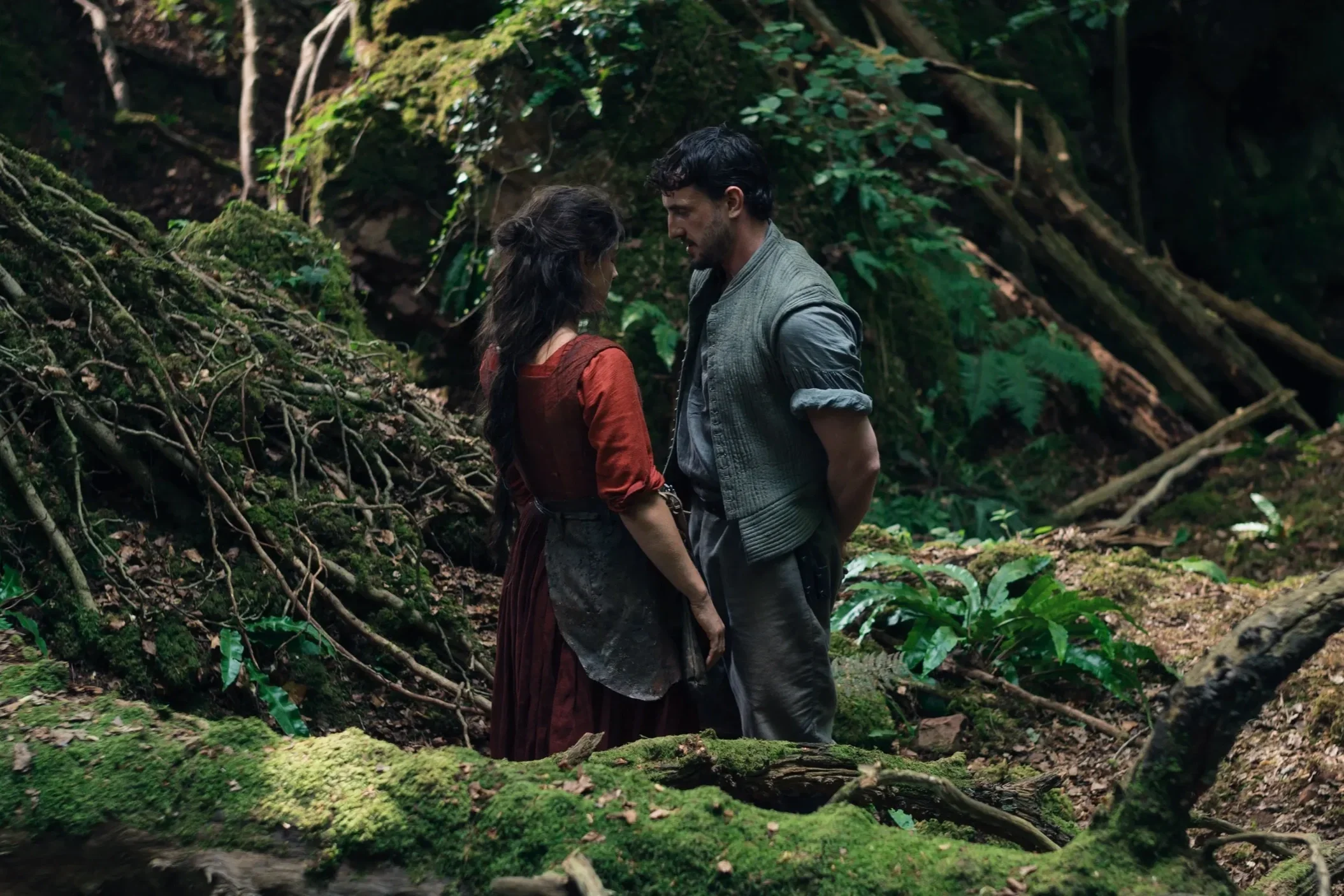
In late-16th-century England, we follow the lives of William Shakespeare (Paul Mescal) and his wife, Agnes (Jessie Buckley), through the birth of their children and the devastating death of their only son, Hamnet. As the couple struggle to come to terms with their immense loss, it serves as a poignant backdrop to one of the English language’s greatest tragedies.
It takes an awful lot of skill to humanise someone as universally and impossibly famous as William Shakespeare. This is a man whose legend and influence is so great, it’s almost mythic, so to tell a tale that not only brings him down to our level but does so while pushing him to one side is quite some achievement.
Released in 2020 to universal acclaim, Maggie O’Farrell’s ‘Hamnet’ did precisely this, accomplishing the seemingly impossible task of making us care about Shakespeare the man. Being the literary hit it was, a big screen adaptation was always likely to be close behind, and considering the book’s remarkable humanising achievement, it makes total sense that the one chosen to helm it is the most humanist director in Hollywood.
After successfully grounding superhuman demigods with Eternals, Chloé Zhao has only gone and done it again here. Pairing her signature natural shooting, lighting, and directing style with the source material’s inherent poignancy and intimacy, Hamnet was always likely to have its heart in the right place, and the results bear this out.
It only takes one look at Hamnet’s synopsis to know that we’re in seriously heavy territory here, but while I’m sure there were temptations to hire a director that could lift the story’s gloom, Zhao was always likely to be the best choice to do it justice and to give it the required emotional heft. And, while there are certainly times when the film’s muted tones and innate bleakness threaten to overwhelm it, Zhao always manages to pull you back from the edge.
Using natural light and an intensely intimate shooting style, Zhao knows precisely how to draw you in to this tale of death and grief without overwhelming you with the story’s immense darkness. Low-key and purposefully restrained, Hamnet’s dialled down storytelling style may take some by surprise, however, this is just how Chloé Zhao does things, and her understated approach manages to complement the film’s intentions perfectly.
It opens the door to this private world in a way that many lesser filmmakers would struggle to, while also making us feel the setting and era in a way that eludes your average period drama. While there must have been a temptation to deviate from the book and lean more into William Shakespeare’s side of the story, Zhao does nothing of the sort by rooting us deeply in Agnes and William’s home life far away from London and The Globe.
Complemented beautifully by Max Richter’s contemplative, haunting score, Zhao’s direction is likewise thoughtful, meditative, and steeped in stripped back magical realism in such a way that will gently draw you in before tightening its emotional grip. Like all of Chloé Zhao’s work, this journey is a slow burn one, however, as it gradually grows and swells and twists the emotional knife, it’s one you will not regret taking.
It’s a journey that has no real twists or turns to it, with a destination that you’ll be expecting and a foreboding gloom that always threatens to consume it, yet it’s one that you can’t help but get swept up in. The film’s earthiness and raw honesty, together with its ethereal, spiritual energy converge to keep you close, even as it’s pain threatens to push you away; and while Chloé Zhao’s personable direction must take a huge chunk of the credit for this, Hamnet’s stars undoubtedly play their part. And while this intimate magical realism requires a very particular brand of actor to execute it, with Jessie Buckley and Paul Mescal leading the way, you just know you’re in very safe hands here.
For the uninitiated, it may come as a surprise that a film containing William Shakespeare would remove him from the spotlight almost entirely, yet this is what Hamnet does, as Paul Mescal is very much nudged to the side-lines. Of course, Paul Mescal being Paul Mescal means he’s able to do fantastic stuff even from the film’s margins, as he adds a humanity and poignancy to his role that we very rarely see from anyone playing Shakespeare, all while showcasing wonderful chemistry with the film’s true focal point.
While they spend much of the back half of the film apart physically, mentally, and spiritually, the on-screen chemistry of Paul Mescal and Jessie Buckley in Hamnet’s first half is quite extraordinary. Complementing Zhao’s direction remarkably, the relationship of Agnes and William in these early moments is as muted and wordless as it is beautiful, with Buckley and Mescal making the most of their time together before the former takes over proceedings.
For all intents and purposes, Hamnet really is Agnes’ story and Jessie Buckley’s film. At this point, you really don’t need me to tell you what an incredible talent Jessie Buckley is, but even then, the way she so comprehensively envelops this film and elevates it all to another level in the process is quite astonishing.
With a screen presence that’s both remarkably commanding and painfully delicate, Buckley imbues Agnes with a strength and a fragility that makes her a far more interesting and more rounded proposition than her famous husband. When tragedy strikes and Mescal’s Shakespeare partially vanishes from the picture and sinks into his work, it’s left to Buckley/Agnes to carry the story to its conclusion - and carry it she most certainly does.
Perfectly complementing Zhao’s direction, Buckley’s performance is a thing of stripped-down beauty, one that bursts with wild, earthy authenticity and crackles with mysticism and magic at its edges. It’s also a performance dripping in pain, loss, and longing that manages to root the entire story, even as it risks getting lost within itself and letting the darkness consume it.
While their time together in the film’s second half is limited, Buckley and Mescal make the very most of it, and when it all culminates in a truly heartbreaking final sequence, the result is something quite special. Without a word shared and powered on by Max Richter’s stirring, gut-wrenching score, the pair’s chemistry with both one another and Chloe Zhao’s direction is palpable in this finale, as they offer a moment of deep, overwhelming catharsis that sends us on our way on a heart wrenching high note that will stick with you long after the credits roll.
While the film’s gloom and intense darkness threaten to overwhelm it at times, when Hamnet hits, it hits. Chloé Zhao’s natural shooting style and her deeply humanist direction bring us right into the very heart and soul of the story in a way that few filmmakers can, ensuring that the emotions really land and the story’s tragedy can be felt on an almost spiritual level. As Shakespeare, Paul Mescal is magnificent, but it’s with Jessie Buckley’s Agnes that Hamnet truly elevates itself, as she puts in one of the performances of what is rapidly becoming a truly special career.